

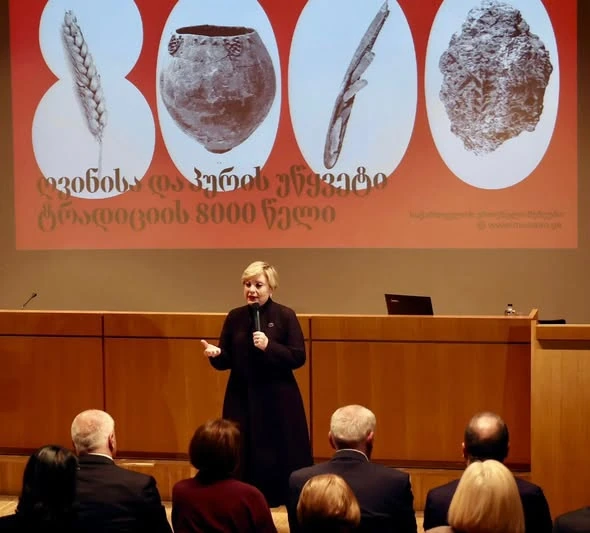

The presentation of the results of the latest scientific research confirming the origin of bread wheat on the territory of Georgia was held at the National Museum.
The Minister of Culture Tinatin Rukhadze attended the presentation together with representatives of the legislative and executive authorities.
On April 27, 2026, an article titled “An Independent Center for the Origin of Bread Wheat in the Neolithic Period of Georgia in the South Caucasus” confirms that Georgia is the independent origin of bread wheat (Triticum aestivum) and is the oldest documented bread wheat.
The article is based on an international multidisciplinary research conducted by the academician David Lortkipanidze, which is based on the 8,000-year-old archaeological material found in Georgia, and paleobotanist Professor Nana Rusishvili’s many years of scientific research.
Based on dating conducted by the radiocarbon method at Israel’s Weisman Institute, it has been confirmed that the material found in the Neolithic settlements of Georgia is the oldest known physical evidence of the existence of bread wheat.
Among the co-authors of the research are Georgian and foreign scientists: Mindia Jalabadze, Inga Markflishvili, Marine Mosulishvili, Nana Meladze, David Maghradze, Elizabeth Boaretto, and Steven Batiuki.
“Last year, UNESCO organized Georgian wheat traditions and rituals. Despite the inclusion of intangible cultural heritage and international recognition, interdisciplinary research through the involvement of international science continued. Today, this important scientific discovery has been confirmed worldwide. I thank the team of our National Museum under the leadership of Mr. David Lortkipanidze for their hard work. In their faces we have scientists, who do great work for Georgia,” Tinatin Rukhadze said.
International multidisciplinary research was carried out within the framework of the Georgian Ministry of Culture, National Wine Agency’s project – “Research and Popularization of Wine and Grapes” – with the support of the University of Toronto, Wiseman Institute, and “Society of Iveria”.

