

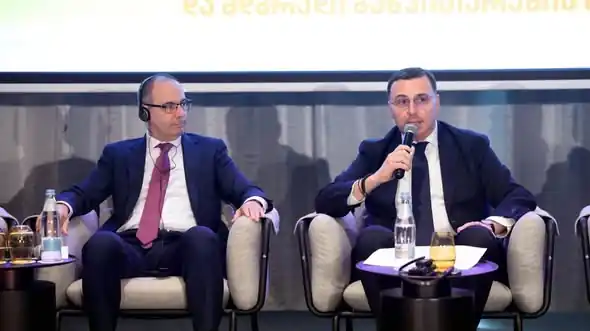

Vice-Mayor of Tbilisi Giorgi Tkemaladze, together with Chairman of the City Council Zurab Abashidze, participated in the 31st discussion of the Georgian Economic Forum – “Water Resources and Tariff Policy, Urban Development, Economic Growth and Sustainable Development Goals”.
The Georgian Economic Forum was held in discussion mode, where participants discussed effective management of water resources, modern challenges and opportunities of urban development, a sustainable economic growth model, the role of infrastructure projects in strengthening the country’s competitiveness, tariff policy, etc.
The vice mayor of the capital addressed the participants of the event and noted that in recent years infrastructure projects in Tbilisi have been thoroughly implemented, which means replacing the damaged water and sewerage network, as well as upgrading any other communication network.
“Tbilisi is growing rapidly. Population, economic activity, construction and spatial area of the city are growing. Development of new residential areas, modernization of transport infrastructure, rehabilitation of new bridges, subway stations, public spaces and streets is underway. The city’s most costly mistake is when a newly rehabilitated street is re-cut within a few months due to a water or sewer line replacement. This means additional financial costs, discomfort for the population, transportation delays, and ineffective use of municipal resources. That’s why one of the main principles for Tbilisi City Hall is that all major urban development projects should be agreed with the plans of infrastructure development of water supply and sewage. Only this approach will ensure that the work done once is of quality, long-term and economically effective,” said Giorgi Tkemaladze.
According to him, among the challenges facing the capital are upgrading old infrastructure and the rapid growth of the city, which requires timely development of engineering networks.
“In our view, the most effective way to overcome these challenges is through partnership and integrated planning. This means that the municipality, the field investor, the regulator, and all responsible authorities have agreed on priorities, investment plans, technical decisions, and the order of work before the project begins. A city’s success is not only measured by the number of roads constructed, new buildings, or the number of projects implemented. The success of a city is measured by how comfortable, safe, and dignified its citizens live. If we want Tbilisi to be competitive, sustainable and a city of the future, it is necessary to consider urban development, water supply, transport and other engineering infrastructure as one interconnected system. It is this approach that can ensure both economic growth and real improvement of the quality of life of the population,” said the Vice Mayor of Tbilisi.
Representatives of legislative and executive authorities, the business sector, various companies, and the academic and analytical sectors took part in the discussion.

