

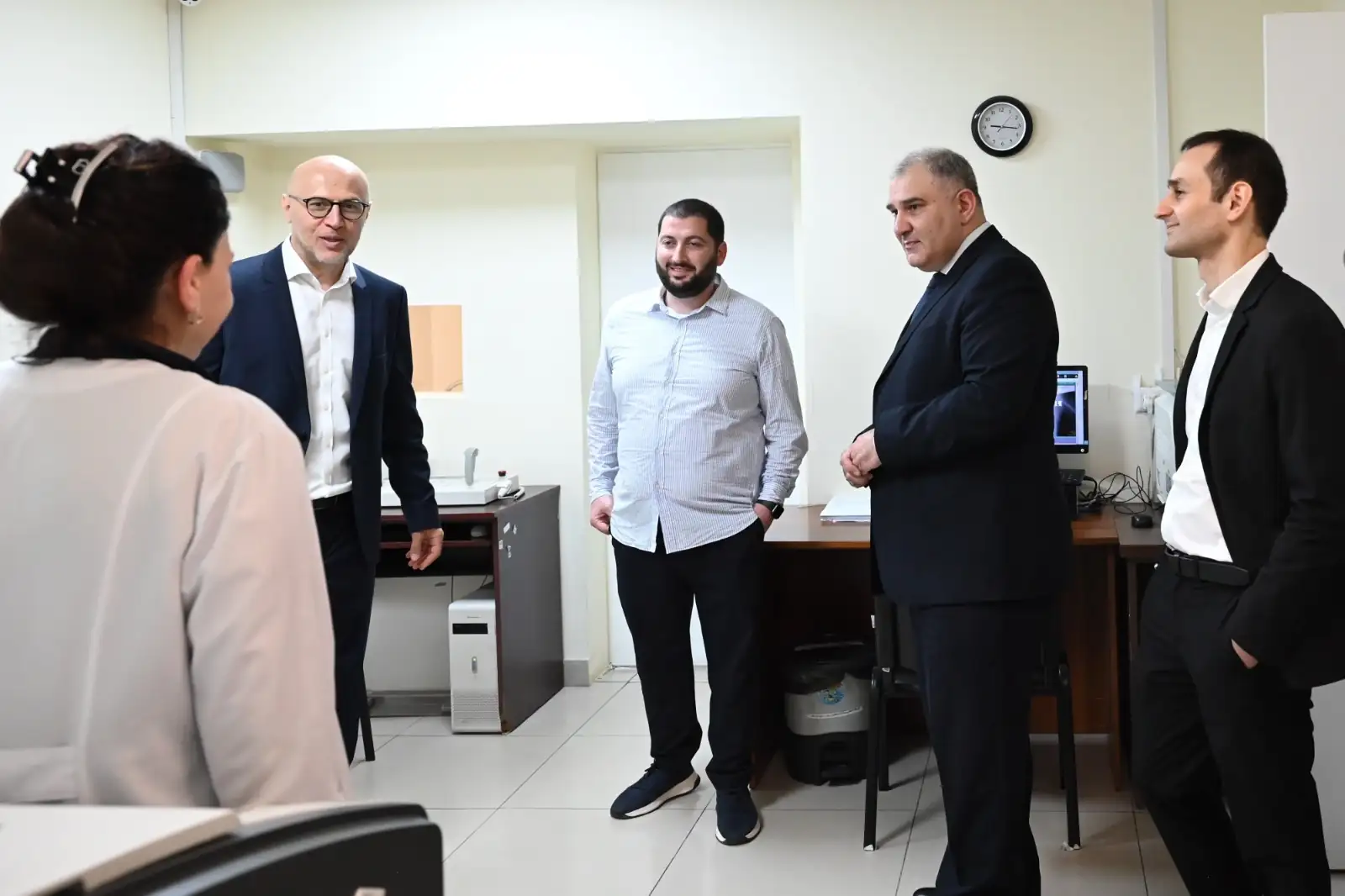

The Minister of Internally Displaced Persons from the Occupied Territories, Labour, Health and Social Affairs of Georgia, Mikheil Sarjveladze, was at the Tsitsishvili Children’s Clinic and got acquainted with the possibilities available in the medical institution in this regard.
Notably, the Tsitsishvili Children’s Clinic was named after I. Tsitsishvili, who wanted to join the service provider in the new component of the State Treatment Program for Rare Diseases.
The Ministry of Internally Displaced Persons from the Occupied Territories, Labour, Health and Social Affairs of Georgia shared the glimpses of the Minister’s visit on its official Facebook Page on May 18, 2026, Monday. The Ministry also shared a small note about the clinic along with the highlight.
A new component of the program will provide outpatient, inpatient, and research services for patients with spinal muscular atrophy, Duchenne, and Becker muscular dystrophy.
Mikheil Sarjveladze visited the departments of diagnostics and ambulatory and got acquainted with their technical equipment. With clinicians and leaders to discuss opportunities available in the medical facility to serve patients with neuromuscular disorders, plus beneficiary needs and effective program management.
According to the Minister, one of the most important components of the treatment of neuromuscular diseases is monitoring their progress. As Mikheil Sarjveladze noted, the news provides beneficiaries with the opportunity to receive a wide range of services they need, making their health management process more efficient.
As part of the new component of the State Program for Treatment of Rare Diseases, beneficiaries will benefit from consultation with neurologist, cardiologist, pulmonologist, endocrinologist, gastroenterologist/nutritionist, orthopedist, as well as – clinical-laboratory and instrumental studies such as: electrocardiography, echo-cardioscopy, 24-hour holter monitoring, spirometry, dentistry, vitamin D con Centering determination, chest x-ray, spinal x-ray, general blood analysis, general urine analysis, creatinkinase determination, kidney functional samples (urinary, Creatinine), liver functional samples (tute phosphatase, alt, ast), electrolytes (sodium, potassium, chlorine, magnesium, iron) determination, blood glucose determination, research on hidden bleeding.

