

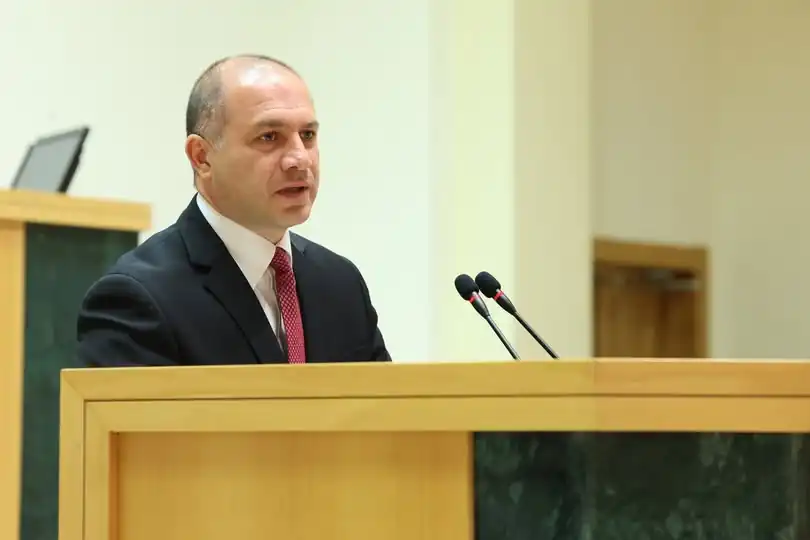

The Minister of Education, Science, and Youth, Givi Mikanadze, spoke in the Georgian Parliament, in interpellation format, about the reform of the higher education system.
The Minister focused on a new higher education funding model, which involved highly qualified local and international experts. According to her, to shape the methodology of evaluating academic programs, the Ministry has studied in detail the practices of various higher education institutions – including the universities of Washington, Michigan, and Colorado- to develop the best international experience-based model that fits the realities and needs of Georgia.
The Education Minister of Georgia noted, “The new higher education funding model is based on a two-component system – basic funding and performance-based funding.”
According to him, the base funding will be defined by the number of students, the cost of programs, and the basic needs of the university’s curriculum, and aims to ensure stable functioning, institutional sustainability, and financial autonomy of the universities, while performance-based funding, which will be implemented in phases, will be linked to the university.
According to the minister, education in public higher education institutions must be free from the 2026-2027 academic year – this is an unprecedented decision made by the governing team.
“Implementing the funding model we have proposed will lay the groundwork for public universities to develop educational programs in line with labor-market and national development priorities, provide high-quality teaching and research environments, as well as decent and competitive pay conditions for academic, administrative, and support staff, – noted Givi Mikanadze.
Specifically, according to his statement, the analysis of the labor market carried out by the Ministry of Economy and Sustainable Development has revealed a large-scale imbalance between universities and the real demands of the labor market. It is to eliminate this imbalance that it is necessary to determine the quotas for admission to universities.
It is noteworthy that in the process of developing the concept of reform, the Ministry studied both the European Higher Education Area (EHEA) approaches and the practices of individual countries where the State actively participates in the strategic planning of the higher education system, consolidating resources, assessing quality, and ensuring compliance with the labour market. “However, the priority is obviously national needs,” said the Minister of Education, Science, and Youth.

